rajaampatprivateyachtcharter.com

— your complete editorial guide curated by senior travel specialists. We cover routes, timing, costs, safety, and bespoke private options for rajaampatprivateyachtcharter.com across Raja Ampat West Papua.

Blog

  • How to Choose a Reputable Private Yacht Operator in Raja Ampat

    To choose a reputable private yacht operator in Raja Ampat, one must meticulously evaluate their operational integrity beyond the glossy brochures. This involves a multi-faceted approach focusing on verifiable credentials and on-the-ground practices.

    • Verify Safety Protocols: Scrutinize international certifications (SOLAS, ISM), crew training, and emergency medical equipment.
    • Assess Sustainability: Confirm their environmental policies, waste management systems, and genuine community engagement.
    • Examine Fleet and Crew: Review the vessel’s maintenance records, crew-to-guest ratio, and the cruise director’s regional expertise.

    The turquoise water laps against the Zodiac’s hull, a rhythmic counterpoint to the distant call of a Blyth’s hornbill. Ahead, the limestone karsts of Wayag rise from the sea like ancient, green-furred titans. The air is thick with the scent of salt and damp earth. This is the sensory immersion of Raja Ampat, an experience that exists at the very edge of the modern world. But reaching this state of sublime isolation depends entirely on a single, critical decision made months, or even years, prior: your choice of a private yacht operator. In an archipelago of over 1,500 islands scattered across 40,000 square kilometers, your vessel is not merely transport; it is your sanctuary, your expedition base, and your sole lifeline. Selecting the right one is an art form, a process of due diligence that separates a passable holiday from a truly transformative journey.

    Beyond the Brochure: Vetting Safety and Seaworthiness

    In the pages of a luxury travel magazine, we often focus on the sybaritic pleasures of a charter—the private chef, the sundeck cocktails, the thread count of the linens. Yet, in a region as remote as Raja Ampat, the paramount concern must be safety. The nearest international-standard hospital is in Sorong, a journey that can take anywhere from 6 to 12 hours by boat, and the closest hyperbaric chamber for diving incidents is often just as far. When you choose a private yacht operator in Raja Ampat, you are entrusting them with your life. A reputable operator views safety not as a line item, but as a culture. It begins with the vessel’s adherence to international standards like the Safety of Life at Sea (SOLAS) convention and the International Safety Management (ISM) Code. Ask for documentation. A hesitant operator is an immediate red flag.

    The crew’s training is equally non-negotiable. The captain should have thousands of hours navigating these specific, often tricky, waters. The dive guides must be, at minimum, PADI Divemasters or Instructors with current first aid and oxygen provider certifications. We advise clients to inquire specifically about the presence of an Emergency First Response (EFR) instructor on board. Furthermore, the yacht must be equipped with more than a basic first-aid kit. Look for operators who carry automated external defibrillators (AEDs), comprehensive medical oxygen kits, and a satellite phone that is tested daily. As a leading charter consultant, we maintain a stringent checklist; operators who fall short are simply not considered. This rigorous approach to Safety & Compliance is the bedrock of a secure and serene expedition into the world’s most biodiverse marine ecosystem.

    The Vessel Itself: Deciphering Fleet Quality and Crew Expertise

    The two primary vessels plying these waters are the traditional Phinisi schooner and the modern motor yacht. Each offers a distinct experience. The Phinisi, a vessel handcrafted by the Konjo boat builders of South Sulawesi for centuries, is a masterpiece of maritime heritage. Built from ironwood and teak, these gaff-rigged ketches offer a romantic, silent passage under sail. However, their quality varies enormously. A well-maintained, 15-year-old Phinisi from a top builder like Haji Abdullah can be vastly superior to a 3-year-old boat from a less experienced yard. Inquire about the vessel’s last dry-docking, the age of its engines and generators, and the presence of modern navigation systems. A modern motor yacht, by contrast, often provides greater speed, climate control, and amenities like gyroscopic stabilizers, which can be a blessing in open-water crossings. The choice is personal, but the standard of maintenance is universal.

    Even more critical than the hardware is the software: the crew. A premier raja ampat private yacht charter is defined by its human element. The industry benchmark for luxury service is a 1:1 crew-to-guest ratio. This ensures that every need is anticipated. The Cruise Director is the linchpin of the entire operation. This individual should possess at least 5-10 years of experience in Raja Ampat, with an encyclopedic knowledge of its dive sites, anchorages, and cultural nuances. They are your expedition leader, naturalist, and concierge. The chef, too, plays a vital role. Can they cater to complex dietary needs 400 nautical miles from the nearest supermarket? Can they source fresh yellowfin tuna from a passing local fisherman? Our internal vetting, detailed in Our Methodology, dedicates a significant portion of its scoring to crew interviews and reference checks, ensuring the human element is as polished as the brass.

    Guardians of the Last Eden: Assessing Sustainability and Community Impact

    Raja Ampat is the global epicenter of marine biodiversity. As documented by Conservation International, this region within the Coral Triangle contains nearly 600 species of hard coral—a staggering 75% of the world’s known total. It is a fragile paradise, and the privilege of exploring it comes with profound responsibility. The discerning traveler today demands more than luxury; they demand stewardship. Therefore, a critical step to choose a private yacht operator in Raja Ampat is to investigate their commitment to conservation. This goes far beyond a token sentence on their website. A truly sustainable operator has tangible, verifiable practices in place.

    Ask pointed questions. How do they manage black and grey water? Top-tier vessels have advanced waste treatment systems, ensuring nothing is discharged into the sea. Do they use mooring buoys or do they anchor? Anchoring can shatter centuries-old coral colonies in seconds. Responsible operators are patrons of the mooring buoy programs or use dynamic positioning. Do they actively participate in conservation? This can include contributing data to organizations like the Raja Ampat Research and Conservation Centre (RARCC), organizing beach clean-ups, and educating guests on reef-safe practices. Furthermore, their relationship with the local Papuan communities is a key indicator. Do they hire local guides? Do they purchase fresh produce from villages like Arborek and Sawinggrai, ensuring tourism dollars flow directly into the local economy? For a deeper look into what constitutes a meaningful pledge, we recommend reviewing our own framework for environmental and community commitments. Traveling with an operator who is a guardian, not just a visitor, is the truest form of luxury.

    Reputation and Recognition: The Power of Social Proof and Affiliations

    In the digital age, a company’s reputation is its currency. However, one must know where to look. While consumer review sites have their place, the nuances of a high-end charter operation are often lost. Instead, seek out social proof from trusted sources. Look for operators who have been featured in discerning media outlets. Recognition in publications like Condé Nast Traveler, Robb Report, or Departures is not easily won and serves as a strong signal of quality. An operator proud of their standing will often have a dedicated page for their press and recognition, providing a portfolio of third-party validation.

    Another powerful indicator is affiliations. Is the operator part of a larger, respected network? Membership in an organization like the Indonesia Liveaboard Association (Phinisi Club Indonesia) or partnerships with luxury travel consortiums demonstrate a commitment to industry standards and a history of positive collaboration. These affiliations act as a pre-vetting mechanism, as the operator has already been scrutinized by its peers. We place significant weight on these relationships, as they provide an extra layer of accountability. Exploring an operator’s list of partners and affiliations can reveal much about their standing in the professional community. Finally, ask the operator for references from past clients, preferably from your home country. A confident, high-quality operator will be happy to connect you with guests who can provide a firsthand account of their experience navigating the incredible archipelago that Indonesia’s official tourism board calls “the last paradise on earth.”

    The Itinerary Itself: Customization vs. Cookie-Cutter Routes

    The ultimate luxury is freedom. In the context of a yacht charter, this translates to a bespoke itinerary. Many operators advertise “custom” trips, but in reality, they follow one of two or three well-worn routes through the Dampier Strait and central Raja Ampat. While these routes cover iconic sites like Piaynemo and the manta ray cleaning stations at Manta Sandy, they can also be crowded, with multiple liveaboards vying for the same anchorage. A truly elite operator distinguishes itself by its ability and willingness to craft a genuinely unique journey based on your specific interests. Are you an avid birder hoping to spot the Red Bird-of-Paradise at dawn on Waigeo Island? A macro-photography enthusiast keen to explore the muck-diving sites of Batanta? Or do you simply crave solitude in the far-flung, seldom-visited islands of the north or south?

    This level of customization requires deep logistical expertise. It means having a captain who knows the uncharted anchorages, a chef who can provision for extended periods away from Sorong, and a cruise director who has personal relationships in remote villages. Before booking, present the operator with a hypothetical request. For example, “We are interested in ancient rock art and would like to spend two days exploring the caves on Misool.” Their response will be telling. A generic reply suggests a fixed program, while a detailed response outlining potential anchorages, tides, and the need for a local guide indicates true bespoke capability. A charter in a place as vast and varied as the Raja Ampat Islands, a UNESCO World Heritage tentative site, should be a personal odyssey, not a package tour. The operator’s flexibility on the itinerary is a direct reflection of the quality and depth of the experience they can deliver.

    Quick FAQ on Choosing a Private Yacht Operator in Raja Ampat

    What is the best time of year to charter a yacht in Raja Ampat? The primary charter season runs from October through April, coinciding with the dry season and offering the calmest sea conditions, particularly for crossings to the southern region of Misool. This period, from December to February, represents the absolute peak, with visibility for diving often exceeding 30 meters. The shoulder months of May and September can also be excellent, with fewer vessels and unique marine life behavior.

    How far in advance should I book my charter? For the top 10% of Phinisis and motor yachts, booking 12 to 18 months in advance is standard, especially for holiday periods like Christmas and New Year’s. The most sought-after vessels are often fully booked more than a year out. For more flexibility, consider booking at least 9 months ahead to secure a quality vessel and your preferred dates.

    Is comprehensive travel insurance mandatory? Yes, and any reputable operator will insist on it. Given the extreme remoteness, your policy must include medical evacuation coverage of at least $200,000 USD. We also strongly recommend “cancel for any reason” coverage. The operator should ask for proof of your policy well in advance of your departure date.

    What is the standard tipping practice for the crew? While discretionary, a gratuity is customary for excellent service. The industry guideline in this region is between 5% and 10% of the total charter fee. This is typically given to the captain at the end of the voyage, who will then distribute it among the entire crew, including those working behind the scenes.

    Embarking on a journey through Raja Ampat is to witness the planet at its most vibrant and pristine. It is an investment not just in a vacation, but in a life-altering experience. The success of this investment hinges on the partner you choose to guide you. By applying a discerning, methodical approach—prioritizing safety, demanding true sustainability, and vetting the expertise of the vessel and crew—you ensure your expedition is seamless, secure, and deeply memorable. The journey begins not when you step aboard, but with the careful selection of your guide. To explore a curated fleet of vessels that meet these exacting standards, we invite you to begin your conversation with a raja ampat private yacht charter specialist today.

  • The Ultimate South Raja Ampat Luxury Sailing Route Guide

    A south Raja Ampat luxury sailing route is an exclusive maritime expedition focusing on the Misool archipelago, a region celebrated for its profound marine biodiversity and dramatic scenery. This itinerary is defined by:

    • Navigating through a labyrinth of towering limestone karst islands.
    • Accessing world-class dive sites within the Misool Marine Reserve.
    • Experiencing a remote, biodiverse sanctuary with unparalleled privacy and service.

    The air is thick with the scent of salt and damp limestone, a primal perfume that clings to your skin. From the teak deck of a traditional Phinisi schooner, the only sounds are the gentle creak of the rigging and the rhythmic lapping of turquoise water against the hull. Before you, a maze of emerald-topped karst pinnacles erupts from a placid sea, their sheer faces etched by millennia of wind and water. This is not a dream; this is the immediate, visceral reality of dropping anchor in the southern reaches of Raja Ampat. While the northern islands offer their own distinct allure, the south, dominated by the Misool archipelago, presents a journey into a more raw, geologically dramatic, and profoundly wild corner of the Coral Triangle. It is a world best accessed, and truly understood, from the privileged vantage of a private vessel.

    Charting Your Course: From Sorong to the Misool Sanctuary

    Every great expedition begins with a single point of departure. For a raja ampat private yacht charter bound for the southern archipelago, that point is Sorong (SOQ) in West Papua. This bustling port town serves as the primary logistical gateway to the islands. Upon arrival, your charter’s dedicated crew will greet you, seamlessly handling your luggage and transferring you to the harbor where your floating home for the next seven to ten days awaits. A 10-night voyage is what I typically recommend to my clients; it allows for a pace that is both immersive and unhurried, a critical component of genuine luxury travel. The initial leg of the journey is a significant open-water crossing of roughly 85 nautical miles from Sorong to the eastern edge of the Misool island group. Most seasoned captains prefer to make this transit overnight. You’ll enjoy a superb dinner, retire to your air-conditioned stateroom, and awaken to a completely transformed world, having traded the sounds of the city for the profound silence of Misool’s outer cays.

    This archipelago, one of the “Four Kings” from which Raja Ampat derives its name, covers over 2,000 square kilometers and is a realm of its own. Its remoteness has been its salvation, preserving ecosystems that have vanished elsewhere. The selection of the right vessel is paramount here. The waters are intricate, and navigating them requires local knowledge and impeccable operational standards. We work exclusively with a network of vetted operators, a curated collection detailed in our Partners & Affiliations directory, ensuring that every yacht not only meets but exceeds the rigorous criteria for safety, service, and environmental stewardship. The journey south is more than a change in latitude; it’s a passage to one of the last truly pristine marine environments on Earth.

    The Labyrinth of Lagoons: Exploring Balbulol and the Karst Seascape

    The defining visual signature of South Raja Ampat is its extraordinary karst topography. These are not mere islands but colossal, sculpted monoliths of ancient limestone, undercut at the waterline into fantastical shapes that defy gravity. The experience of gliding through these formations in a sea kayak or a high-speed tender is the very essence of the southern route. One of the most iconic of these seascapes is the Balbulol Lagoon. Here, a collection of conical islets, often referred to as “Christmas tree rocks,” are scattered across a shallow, crystalline lagoon. The water is so clear that the boat appears to float on air above intricate coral gardens. From the deck, you can watch Blacktip reef sharks patrol the sandy bottom, their dorsal fins slicing through the placid surface just meters away.

    Further into the archipelago lies the Dafalen area, home to a formation known locally as the “sacred heart” or “broken-hearted lagoon.” Reaching it is an adventure in itself. Your tender will navigate a narrow channel before you disembark to swim through a short, cathedral-like cave. As you emerge on the other side, the water opens into a perfectly heart-shaped lagoon, enclosed on all sides by towering cliffs. It’s an intimate, almost spiritual place, accessible to only a handful of people at a time. This level of solitude is a core tenet of the private charter experience. While day-trip boats from resorts might crowd a few key sites, your yacht’s captain can time your visits for complete privacy, anchoring in secluded bays where the only other souls are the ones you invited. These landscapes, formed over 35 million years, are a powerful reminder of geological time, and exploring them feels like navigating through a lost world.

    Subaquatic Sanctuaries: The Misool Marine Reserve

    While the scenery above the water is arresting, the true global significance of South Raja Ampat lies beneath the surface. The entire region is anchored by the Misool Marine Reserve, a 1,220-square-kilometer “no-take zone” established in partnership with the local community and the Misool Eco Resort. This conservation success story has resulted in a staggering recovery and proliferation of marine life. According to a 2012 Conservation International survey, fish biomass inside the protected area increased by an average of 250% in just six years. Today, those numbers are even more impressive. This is the epicenter of marine biodiversity, a fact recognized by its inclusion on UNESCO’s Tentative World Heritage List.

    For divers, a journey here is a pilgrimage. Famed sites like Magic Mountain are not just dive spots; they are underwater metropolises. It’s a seamount where you can witness Oceanic Manta Rays (Mobula birostris) gliding into cleaning stations, be enveloped by swirling vortexes of chevron barracuda, and spot elusive pygmy seahorses clinging to gorgonian fans—all on a single dive. At Boo Windows, you can swim through two large, eye-like holes in the rock, emerging on the other side into a reef bursting with color and activity. The sheer density of life is difficult to comprehend. The region is home to over 1,500 species of fish and 75% of the world’s known coral species. A commitment to protecting this treasure is non-negotiable. Our dedication to environmental and community sustainability ensures that every charter we endorse operates with the lightest possible footprint, contributing to the very conservation initiatives that make this destination so vital.

    Beyond the Dive Mask: Cultural Echoes and Onshore Discoveries

    To define South Raja Ampat solely by its diving would be to overlook the rich tapestry of experiences available on land. This is a region with a deep human history, etched into the very rock formations that define it. On the sheer limestone cliffs of certain islands, you can find ancient petroglyphs—ochre-colored hand stencils, fish, and cryptic symbols painted by Austronesian voyagers an estimated 3,000 to 5,000 years ago. Floating in a tender beneath these silent galleries, you feel a direct connection to the generations of seafarers who navigated these same waters. Your expedition leader, an expert in local history and ecology, can illuminate the stories behind these markings, transforming a simple sightseeing excursion into a profound historical encounter.

    Another highlight is the surreal experience of visiting one of Misool’s marine lakes, like the one at Lenmakana. After a short, steep climb over sharp limestone, you descend into a hidden basin containing a landlocked saltwater lake. Here, millions of Mastigias jellyfish pulse through the water in a silent, hypnotic ballet. Having been isolated from predators for millennia, they have lost their sting, allowing you to swim among them in complete safety. It is an otherworldly immersion. Furthermore, a well-orchestrated charter includes opportunities for respectful cultural exchange. Visiting a small, traditional village, with the guidance and permission of local elders, provides insight into a way of life intrinsically linked to the sea. These interactions are managed with the utmost care, ensuring they are beneficial for the community and enlightening for the visitor. The rigorous safety and compliance protocols of our partner yachts extend to these onshore activities, guaranteeing a secure and thoughtfully curated experience from start to finish.

    The Art of Onboard Living: Phinisi Craftsmanship and Bespoke Service

    The vessel itself is an integral character in the story of your southern Raja Ampat journey. Many of the most distinguished yachts plying these waters are modern interpretations of the Phinisi, a traditional Indonesian two-masted sailing ship whose boat-building traditions were inscribed by UNESCO as a Masterpiece of the Oral and Intangible Heritage of Humanity. These are not merely boats; they are floating boutique hotels, handcrafted from ironwood and teak, combining age-old design with state-of-the-art amenities. The crew-to-guest ratio often exceeds 1:1, a standard of service that anticipates your needs before you are even aware of them. As I discovered during a trip featured in our media section, the synergy between a world-class crew and a magnificent vessel is what elevates a trip from a vacation to a life-altering experience.

    A typical day unfolds with effortless grace. It might begin with yoga on the sun deck as dawn breaks over the karsts, followed by a breakfast of exotic fruits and freshly baked bread. The morning is for exploration—two dives or a long snorkeling session along a vibrant reef. After a gourmet lunch prepared by your private chef, the afternoon is for leisure: perhaps kayaking into a hidden cove, paddleboarding across a glassy lagoon, or simply reading a book on a shaded daybed. As evening approaches, the crew serves cocktails and canapés as you watch the sky ignite with the sunset. Dinner is a multi-course affair, often featuring locally sourced seafood, served under a canopy of stars so bright they seem almost within reach. This is the essence of a raja ampat private yacht charter; it’s the freedom to follow a flexible itinerary, the luxury of absolute privacy, and the pleasure of impeccable, personalized service in one of the planet’s most spectacular settings.

    Quick FAQ: Your South Raja Ampat Sailing Questions Answered

    When is the best time to sail South Raja Ampat?
    The prime season for the southern route is from October to April. During these months, the northwest monsoon brings calmer seas and clearer skies to the Misool region, creating ideal conditions for sailing, diving, and all water activities. The months of November through February typically offer the absolute best visibility and surface conditions.

    How much does a luxury charter in this region cost?
    All-inclusive private charters for a 7- to 10-night southern itinerary generally range from $30,000 to over $150,000 per week. The final price depends on the size and class of the yacht, the number of guests, the length of the charter, and the specific inclusions. These rates typically cover the vessel, crew, all meals, non-alcoholic beverages, and activities like diving and kayaking.

    Is the south suitable for non-divers?
    Absolutely. While the diving is world-class, the south is a paradise for non-divers as well. The dramatic overwater scenery is a primary draw. Activities like kayaking through karst mazes, snorkeling in vibrant shallow reefs, discovering ancient rock art, swimming in the non-stinging jellyfish lake, and enjoying the sheer luxury of the yacht make for a complete and fulfilling expedition for everyone on board.

    How do you select the right yacht for this specific route?
    Choosing the right vessel is critical for navigating Misool’s intricate waters. It requires a deep understanding of the yachts, their captains, and their crew’s specific expertise in the region. It involves evaluating everything from dive operations and safety records to culinary programs and sustainability practices. Our transparent selection process, detailed in Our Methodology, ensures that we only recommend charters that meet the highest standards of excellence and are perfectly suited for this unique and demanding environment.

    The southern route of Raja Ampat is more than a destination; it is an immersion into a world of profound natural wonder, ancient history, and unparalleled marine vitality. It offers a rare combination of raw adventure and refined luxury, a journey that challenges the senses and soothes the soul. The intricate dance of light on water, the explosion of life on the reefs, and the silent majesty of the karst islands create a tapestry of memories that will endure long after you have returned to shore. To sail here is to witness a planet at its most vibrant and to do so from the exclusive platform of a private yacht is the ultimate expression of exploratory travel.

    Your voyage into the heart of the Coral Triangle awaits. Contact our team of specialists to begin designing your bespoke raja ampat private yacht charter and chart a course to the extraordinary.

  • An Unforgettable 7-Day Raja Ampat Private Yacht Itinerary

    A 7-day Raja Ampat private yacht itinerary is a bespoke marine expedition through Indonesia’s most biodiverse archipelago. This curated voyage through the heart of the Coral Triangle offers unparalleled access to remote islands and pristine underwater ecosystems.

    • Explore world-class dive sites like Manta Sandy and Cape Kri.
    • Hike to iconic viewpoints in Wayag and Piaynemo.
    • Experience the unique culture of Papuan coastal communities.

    The teak deck is warm underfoot, the air thick with the scent of salt and wild orchids. Below, the turquoise water is so impossibly clear that the vibrant coral gardens 15 meters down seem close enough to touch. This is the moment a journey with a raja ampat private yacht charter truly begins: not at the airport, not at the dock, but when the thrum of the engine fades and the only sound is the whisper of the sea against the hull. As a travel editor, I’ve been fortunate to experience the world’s most exclusive destinations, but nothing prepares you for the raw, elemental beauty of this archipelago. It’s a place that redefines your understanding of nature. This is not a trip; it is a full-sensory immersion into the last true paradise on Earth.

    Day 1: Sorong to the Dampier Strait – The Overture

    Your journey commences at Sorong’s Domine Eduard Osok Airport (SOQ), the primary gateway to West Papua. Forget the usual travel friction; a representative from your charter will greet you, handling luggage and guiding you to a private vehicle for the short transfer to the harbor. Stepping aboard your floating sanctuary—be it a traditional Indonesian phinisi or a sleek modern motor yacht—you are welcomed with a chilled towel and a refreshing lemongrass tea. The crew, handpicked for their expertise and intimate knowledge of these waters, will conduct a brief but thorough safety orientation. It’s this focus on professionalism that sets a premier charter apart; every detail is considered, a core tenet of how we evaluate and select our charter partners. After settling into your stateroom, the yacht casts off, leaving the bustle of Sorong behind and charting a course for the legendary Dampier Strait. This channel, separating the islands of Waigeo and Batanta, acts as a funnel for the Indonesian Throughflow, creating nutrient-rich currents that support an explosion of marine life. Your first anchorage is near Mioskon Island, where an afternoon check-dive or snorkel reveals what’s to come: vast schools of yellow-tail fusiliers parting like a curtain to reveal resting wobbegong sharks and psychedelic-hued soft corals.

    Day 2: Arborek & The Manta Sandy Spectacle

    The morning begins with the gentle rocking of the yacht anchored off Arborek Island. This small, immaculate village, with a population of just under 200, offers a genuine glimpse into the lives of the Papuan people who call this region home. A walk along its sandy paths reveals a community deeply connected to the ocean and actively involved in its preservation. Their local conservation initiatives, which include designated no-take zones and manta ray protection programs, are a powerful testament to grassroots environmentalism. Our commitment as a charter service is to support these efforts directly, a philosophy detailed in our environmental and community commitments. After sharing smiles and perhaps purchasing some locally made handicrafts, you’ll motor a short distance to one of the planet’s most celebrated dive sites: Manta Sandy. This submerged pinnacle serves as a “cleaning station” for giant oceanic manta rays. You’ll descend to a designated observation area on the sandy bottom, around 18 meters deep, and simply wait. Soon, the majestic creatures, with wingspans reaching up to 7 meters, glide in gracefully, hovering over coral bommies as cleaner wrasse dart out to feast on parasites. It is a humbling, almost spiritual, underwater ballet.

    Day 3: Piaynemo’s Karst Panorama

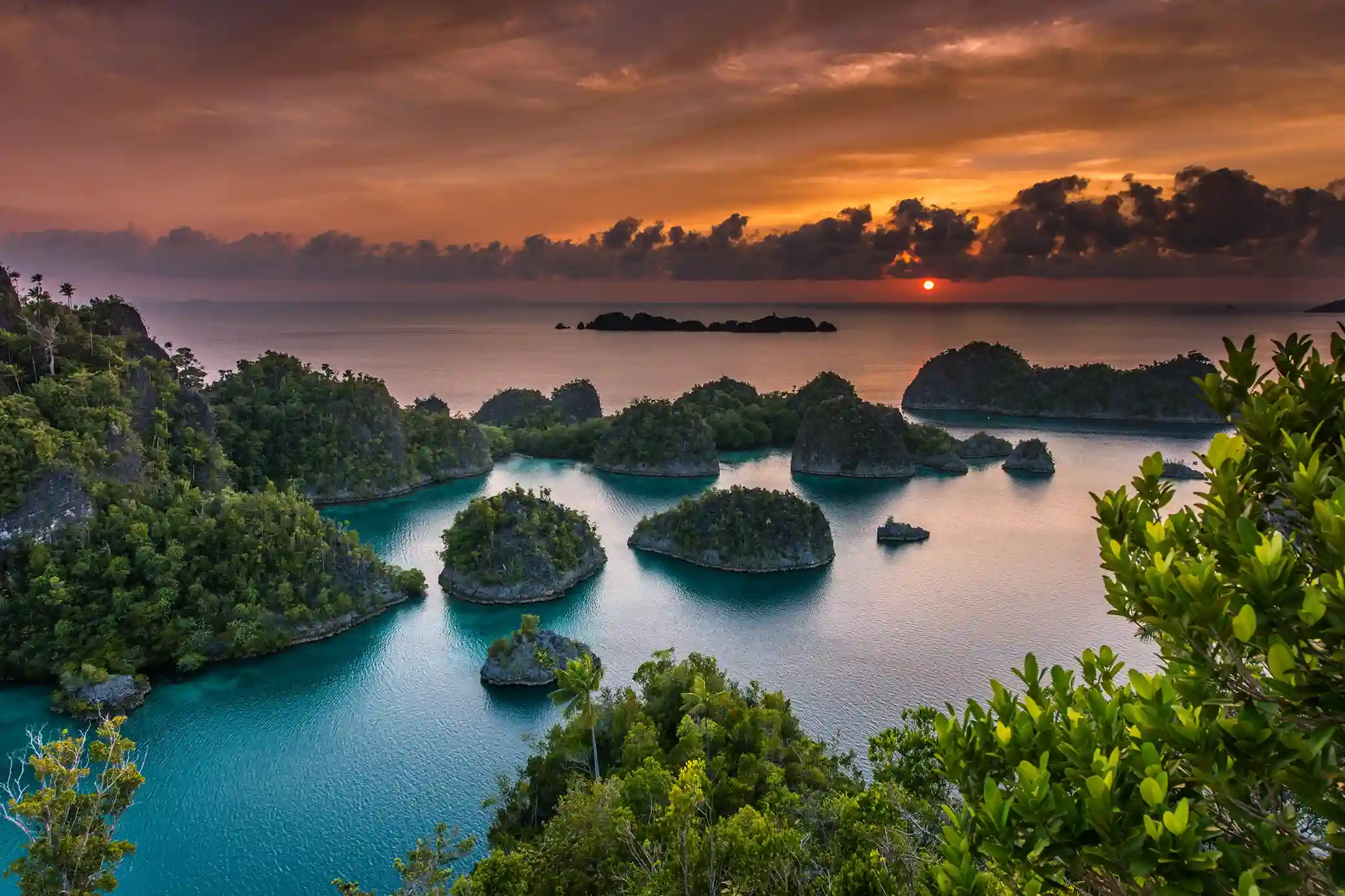
    Today is a day of dramatic perspectives. After a delicious breakfast prepared by your private chef, the yacht navigates into the heart of the Fam Islands, home to the iconic Piaynemo. A sturdy, well-maintained wooden staircase of 320 steps leads you to a viewing platform perched atop one of the limestone karsts. The reward for the short climb is one of the most photographed vistas in all of Indonesia. Below, a collection of mushroom-shaped islets, cloaked in verdant foliage, rise from a star-shaped lagoon of crystalline water shifting through every conceivable shade of blue and green. This karst topography, formed by the dissolution of soluble bedrock over millennia, is what gives Raja Ampat its signature otherworldly appearance. The afternoon is dedicated to exploring these calm, protected lagoons at sea level. Launching a kayak or stand-up paddleboard from the yacht’s stern, you can glide silently through the maze of islands, discovering hidden coves and listening to the calls of cockatoos and hornbills. The crew is always on standby in a tender, ensuring a seamless and safe experience, a reflection of the stringent safety protocols all our partner vessels adhere to.

    Day 4: Wayag – The Crown Jewel of Raja Ampat

    The journey to Wayag, Raja Ampat’s northernmost and most revered island group, often involves an overnight passage. You’ll awaken to a sight that seems lifted from a fantasy epic. The sea is dotted with hundreds of conical karst spires, thrusting skyward like ancient sentinels. This is the archipelago’s wild, untamed heart. The primary objective here is the exhilarating trek to the summit of Mount Pindito. It’s more of a scramble than a hike, requiring good footwear and a sense of adventure as you navigate sharp limestone and use fixed ropes. Your experienced guide leads the way, and the 30-minute effort is repaid a thousandfold. The panoramic view from the top is the definitive Raja Ampat experience—an endless labyrinth of emerald islands set in a sapphire sea. The official Indonesian tourism board rightly calls it “Heaven on Earth.” The afternoon can be spent snorkeling in the shallow, coral-rich bays, where juvenile blacktip reef sharks patrol the flats, or simply relaxing on a deserted, powder-white beach that your crew has prepared with umbrellas and refreshments. Wayag is a strictly regulated marine protected area, and access is a privilege, one that underscores the value of traveling with a licensed and reputable charter.

    Day 5: Kawe & The Equator Crossing

    Sailing south from Wayag, today’s destination is the island of Kawe. This area is unique for a very specific geographical reason: the equator runs directly through it. Your captain will navigate to the precise 0° 0’ 0” latitude line, where it’s tradition to celebrate the crossing with a toast. The moment provides a novel thrill, a geographical milestone that few travelers ever get to experience. The diving here is equally exceptional. One of the signature sites, Eagle Rock, is a submerged ridge known for its powerful currents and, consequently, its incredible density of marine life. As you drift along the reef wall, you’ll be surrounded by massive schools of surgeonfish, jacks, and barracuda. The corals here are pristine, and it’s a prime location for spotting larger pelagics. This kind of exclusive, high-caliber experience is precisely why a private charter in this region has garnered so much attention, a fact reflected in our growing list of media features and accolades. The evening is spent at a quiet anchorage, enjoying a gourmet dinner under a canopy of stars so bright they seem to illuminate the entire sky, completely free from any light pollution.

    Day 6: Aljui Bay’s Hidden World & The Gam Passage

    This 7-day Raja Ampat private yacht itinerary also highlights the region’s diversity beyond the reefs. Today, you’ll explore Aljui Bay, a deep, fjord-like inlet on the western side of Waigeo. This bay is famous for two things: the Atlas South Sea Pearl farm and its phenomenal muck diving. A pre-arranged tour of the pearl farm offers a fascinating look into the complex process of cultivating these lustrous gems, from seeding the oysters to harvesting. Afterward, the focus shifts from the grand to the minute. The bay’s silty bottom is a treasure trove for macro photographers and critter hunters. Your dive guide, an expert in spotting camouflage, will point out wonders you’d otherwise miss: pygmy seahorses the size of a fingernail clinging to gorgonian fans, flamboyant cuttlefish, and ornate ghost pipefish hiding amongst the seagrass. In the afternoon, the yacht transits through the Gam Passage, a narrow, river-like channel that separates the islands of Gam and Waigeo. Lined with dense mangroves and sheer cliffs, navigating this passage is a memorable experience in itself, showcasing the captain’s skillful seamanship.

    Day 7: Cape Kri & The Final Flourish

    For your final full day, the itinerary saves one of the best for last: the area around Kri Island. This is where marine biologist Dr. Gerald R. Allen set a world record in 2012 by identifying an astounding 374 different species of fish on a single dive at the site known as Cape Kri. The sheer biomass here is staggering. As you descend, you are immediately enveloped in a swirling vortex of fish—trevallies hunting fusiliers, sweetlips hovering in dense schools, and enormous Napoleon wrasse lumbering past. The coral slope is a mosaic of color and texture, teeming with life at every inch. It is a fitting finale to a week spent exploring the epicenter of marine biodiversity, a region that UNESCO recognizes for its Outstanding Universal Value. After two final, unforgettable dives, the yacht begins its slow, steady cruise back toward Sorong. The final evening is a celebration—a chef’s special dinner served on the main deck, sharing stories and photos with the crew who have become like family. You’ll anchor just outside the harbor, ready for a seamless transfer to the airport the next morning, your mind and soul overflowing with the vibrant life of Raja Ampat.

    Quick FAQ: Your Raja Ampat Expedition

    Q: What is the best time of year to charter a yacht in Raja Ampat? A: The prime season runs from October through April. During these months, the seas are generally calmest and underwater visibility is at its peak, often exceeding 30 meters. This period corresponds with the region’s dry season.

    Q: How do you select the yachts and crews in your portfolio? A: We employ a rigorous vetting process for every vessel. Each yacht is inspected for safety, luxury amenities, and service standards. Crews are evaluated based on their local knowledge, professional certifications, and hospitality experience. This ensures we only work with the most reputable partners and affiliates in the region.

    Q: Do I need to be a certified diver to enjoy this itinerary? A: Absolutely not. While Raja Ampat is a diver’s paradise, the snorkeling is equally world-class, with vibrant coral gardens in shallow, protected bays. Many of our charters can also arrange for PADI dive courses and certifications to be completed on board for those who wish to learn.

    Q: What is included in a typical charter fee? A: A fully-crewed charter generally includes the exclusive use of the yacht, all meals and snacks prepared by a private chef, non-alcoholic beverages, and the use of all onboard water sports equipment such as kayaks, paddleboards, and snorkeling gear. For diving, it typically includes tanks, weights, and the services of a divemaster. Specific inclusions can vary by vessel.

    A week in Raja Ampat aboard a private yacht is more than a vacation; it is a profound reconnection with the natural world. The itinerary detailed here is merely a template, a suggestion of the wonders that await. The true luxury lies in the freedom to tailor each day to your desires—to linger at a favorite dive site, to discover a deserted beach, or to simply do nothing at all. If you are ready to write your own story in the world’s last Eden, we invite you to begin your journey. Contact our specialists to design your bespoke raja ampat private yacht charter expedition today.

  • Sailing Raja Ampat in October: A Private Cruise Guide

    Sailing Raja Ampat in October offers a unique shoulder-season advantage for discerning travelers. It marks the transitional period between monsoons, resulting in calm seas, exceptional underwater visibility, and fewer vessels, making it an ideal time for a private luxury cruise.

    • Optimal Conditions: Experience calm waters and average temperatures of 29°C.
    • Peak Marine Life: Witness the height of manta ray aggregation at key sites.
    • Exclusive Access: Enjoy popular anchorages with significantly reduced tourist traffic.

    The air hangs heavy and warm, thick with the scent of petrichor from a passing morning shower and the faint, briny perfume of the Banda Sea. From the bow of the Amandira, a custom-built 52-meter phinisi, the scene unfolds not as a picture postcard, but as a living, breathing diorama. The stillness of the water mirrors the impossibly steep karst islets of Wayag, their limestone cliffs weeping with green. It’s early October, and here, in the world’s most biodiverse marine sanctuary, a profound quiet reigns. The drone of a generator is a distant memory, replaced by the gentle lapping of water against the hull and the cry of a sea eagle overhead. This is the singular reward of sailing Raja Ampat in October—an experience of raw, unfiltered nature, enjoyed in near-total solitude.

    Why October? The Strategic Shoulder Season Advantage

    In the world of high-end expedition cruising, timing is everything. Veteran charter captains I’ve spoken with over the years, from the grizzled Bugis sailors to European skippers, almost universally whisper of October as their preferred month in Raja Ampat. It’s the pivot point in the archipelago’s weather calendar, a brief, magical interlude between the dry, blustery southeast monsoon (June-September) and the wetter northwest monsoon (December-March). During this transitional period, the prevailing winds abate, often resulting in weeks of glassy seas and placid anchorages. While a brief, refreshing squall might pass through in the afternoon, lasting no more than 30 minutes, the days are predominantly calm and bright. Water temperatures hover at a consistent 28-29°C (82-84°F), and underwater visibility frequently exceeds 25 meters. This is a stark contrast to the peak season months of December and January, when anchorages in the Dampier Strait can feel, as one captain wryly told me, “as crowded as the marina in Monaco.” In October, it’s not uncommon to be the only vessel in sight for days on end, transforming a popular destination into a truly private paradise. This exclusivity is the core appeal for those booking a raja ampat private yacht charter; it’s about curating an experience, not just visiting a location.

    Navigating the Misool Microclimate: A Southern Jewel

    While the northern regions of Raja Ampat, like Wayag and the Dampier Strait, are magnificent, my sources on the ground—expedition leaders and marine biologists who have spent decades here—consistently point south in October. The Misool region, a sprawling 300,000-hectare marine protected area, operates on a slightly different climatic rhythm. Its unique topography, a labyrinth of thousands of limestone islets, creates a significant rain shadow and localized weather patterns that often defy the broader regional forecast. According to data from the Misool Foundation, October sees a marked decrease in rainfall and wind compared to the preceding months, making it the prime window to explore its treasures. This is where a bespoke itinerary truly shines. A skilled captain can navigate you through areas like the iconic Balbulol Lagoon or to the sacred Tomolol Cave, where ancient rock art, estimated to be between 3,000 and 5,000 years old, adorns the walls. The journey from the central Dampier Strait to Misool is roughly 80 nautical miles, a seamless overnight passage on a well-appointed yacht. Evaluating which vessels are best suited for this specific southerly route is a key part of our methodology, ensuring not just comfort but also access to the most remote and protected coves that larger vessels simply cannot reach.

    The Underwater Spectacle: A Manta Ray Ballet

    Let’s be direct: the primary draw for many to this corner of the world is what lies beneath the surface. Raja Ampat is the heart of the Coral Triangle, an area that, according to Indonesia’s official tourism board, contains nearly 75% of the world’s known coral species. October, however, offers something more specific and profoundly moving. It’s the peak of the season for oceanic manta rays (Manta birostris) at cleaning stations like Manta Sandy and Blue Magic. These gentle giants, with wingspans reaching up to 5.5 meters, congregate in remarkable numbers to have parasites removed by smaller reef fish. On a dive last October, I counted no fewer than 14 individuals in a single hour, a swirling, choreographed ballet that is simply without parallel. But it’s not just about the megafauna. The nutrient-rich waters during this transitional period also trigger spectacular plankton blooms, which in turn attract vast schools of fish. The sheer density of life is staggering. As a UNESCO World Heritage site candidate, the region’s preservation is paramount. Responsible operators are critical, and our commitment to sustainability ensures we partner only with charters that adhere to the strictest marine park regulations, employing local Papuan guides and contributing to conservation efforts. This isn’t just about observing nature; it’s about participating in its preservation.

    Crafting Your Itinerary: A Sample 10-Day Voyage

    A private charter is defined by its freedom from fixed schedules, but a well-considered framework is essential. Here is a blueprint for an ideal 10-day journey in October, balancing iconic sites with hidden gems.

    Days 1-2: Sorong & The Dampier Strait. After arriving at Sorong’s Domine Eduard Osok Airport (SOQ), you are transferred to your yacht. The first afternoon is spent settling in as you cruise into the Dampier Strait. Your first full day is for world-class diving or snorkeling at sites like Cape Kri, which holds the world record for the highest number of fish species (374) identified on a single dive.

    Days 3-4: The Pinnacles of Wayag. A northward overnight cruise brings you to the breathtaking limestone karsts of Wayag. The morning is for the short but steep climb to the famous viewpoint, offering a panoramic vista of the turquoise lagoons. The afternoon is spent kayaking or paddleboarding through the maze of quiet, emerald-water channels.

    Days 5-7: The Passage & South to Misool. You’ll transit south, perhaps stopping at the island of Penemu to see the “mini-Wayag” viewpoint at Piaynemo. The following days are dedicated to the southern marvel of Misool. Explore the otherworldly Jellyfish Lake, a marine lake where you can swim among millions of non-stinging golden jellyfish. Dive sites like Boo Windows and Magic Mountain, known for their vibrant soft corals and incredible biodiversity, are on the agenda. Our network of verified partners and affiliations ensures your captain has the local knowledge to find the most secluded and pristine spots.

    Days 8-10: Misool’s Eastern Edge & Return. Discover the ancient rock art in Tomolol Cave and the dramatic seascapes of the Daram Islands on Misool’s eastern fringe. Enjoy a final celebratory dinner on a deserted white-sand beach, prepared by your private chef. The final day involves a calm, steady cruise back to Sorong for your departure, filled with memories of an archipelago experienced at its most intimate and serene.

    The Onboard Experience: Beyond the Scenery

    The landscape of Raja Ampat may be the canvas, but the onboard experience is the masterpiece. The modern luxury phinisi, a traditional Indonesian two-masted sailing ship, has evolved into a floating boutique hotel. Vessels like the Dunia Baru or the Prana by Atzaró, which has been featured in numerous high-profile publications as noted in our press and recognition section, offer a crew-to-guest ratio that is often better than 1:1. This translates to an almost telepathic level of service. Your divemaster knows you prefer a 3mm wetsuit. The chef, often trained in Michelin-starred kitchens, remembers you enjoy spicy sambal with your morning eggs. The days are unstructured, dictated by whim. Perhaps a pre-dawn fishing excursion, a private yoga session on the sun deck, or a massage after a long day of diving. The most critical element, however, is one you cannot see: safety. The waters here are remote, and medical facilities are basic. This is why we place immense emphasis on a vessel’s operational integrity. Every yacht we recommend has undergone a rigorous inspection, verifying its adherence to international maritime law and our own stringent standards for safety and compliance, including advanced navigation systems, certified crews, and comprehensive emergency protocols. This peace of mind is the ultimate luxury, allowing you to fully immerse yourself in the magic of the journey.

    Quick FAQ on Sailing Raja Ampat in October

    What is the weather really like in October?
    Expect predominantly calm and sunny days with air temperatures around 31°C (88°F). The key feature is the lack of strong, persistent wind. You may encounter brief, isolated rain showers, typically in the late afternoon, which pass quickly and cool the air beautifully. It’s far from the “rainy season” some guidebooks might suggest.

    Is an October charter suitable for non-divers?
    Absolutely. The calm, clear waters make it perfect for snorkeling, kayaking, and paddleboarding. The dramatic above-water scenery, birdwatching opportunities (think Birds of Paradise), and cultural visits to local villages provide a rich experience for everyone, not just those exploring the reefs below.

    How far in advance should I book for an October trip?
    For prime vessels, especially the most sought-after phinisis, I recommend booking 12 to 18 months in advance. October’s reputation as the “insider’s season” is growing, and the best yachts are reserved quickly. A 50% deposit is standard to secure a booking of this nature.

    What is a realistic budget for a private charter?
    For a high-end, all-inclusive 7-night charter on a luxury phinisi accommodating 8-12 guests, a realistic starting point is between $60,000 and $90,000 per week. This typically includes all meals, non-alcoholic beverages, diving, shore excursions, and park fees. Top-tier yachts like Lamima can command upwards of $140,000 per week.

    The allure of sailing Raja Ampat in October lies in its perfect paradox: it is both an epic adventure to the planet’s last frontier and an exercise in profound tranquility. It’s a chance to witness a world-class natural spectacle without the crowds, to feel as if this sprawling, ancient archipelago is yours and yours alone. The experience is shaped not by a checklist of sights, but by the rhythm of the tides and the expert guidance of your crew. To begin crafting your own bespoke journey into the heart of marine biodiversity, we invite you to explore a raja ampat private yacht charter and let us connect you with the vessel and crew that will redefine your understanding of discovery.

  • When is the Best Time to Charter a Yacht in Raja Ampat?

    The best time to charter a yacht in Raja Ampat is during the dry season, which runs from October to April. This period offers the most favorable travel conditions for exploring the archipelago’s 1,500 islands.

    • Calm Seas: The northwest monsoon provides shelter, resulting in placid waters ideal for smooth sailing and accessing remote anchorages.
    • Optimal Visibility: Underwater visibility for diving and snorkeling frequently exceeds 30 meters, revealing the full vibrancy of the coral reefs.
    • Peak Marine Life: This season coincides with the highest concentration of manta rays at cleaning stations and increased chances of whale shark sightings.

    An Editor’s Dispatch from the World’s Last Eden

    The gentle lapping of turquoise water against the hull is the only sound that punctuates the dawn. From the sundeck of the Lamima, a 65-meter custom phinisi, the silhouettes of Wayag’s iconic karst formations rise from the sea like ancient temples. A warm breeze carries the scent of damp earth and salt. This is Raja Ampat, a sprawling archipelago at the nexus of the Indian and Pacific Oceans, and a place that operates on its own timeline. As a travel editor, I’m asked one question more than any other about this region: when should I go? The answer, much like the destination itself, is more nuanced and magnificent than a simple date on a calendar. For those planning the ultimate escape, a raja ampat private yacht charter, timing is not just about weather—it’s about unlocking the very best of what this underwater kingdom has to offer.

    Deconstructing Raja Ampat’s “Seasons”: A Tale of Two Monsoons

    Forget the four distinct seasons you know. Straddling the equator, Raja Ampat’s climate is governed not by winter or summer, but by the shifting monsoonal winds. The entire year is warm, with air temperatures hovering between 27-32°C (81-90°F) and water temperatures a consistent, bath-like 28-30°C (82-86°F). The critical distinction lies between the northwest monsoon and the southeast monsoon. The former, arriving around October and lasting through April, ushers in the so-called “dry season.” This is the prime window for yachting. The winds are gentler and the seas are significantly calmer, particularly in the central and northern regions like the Dampier Strait. While this is a tropical rainforest climate—as confirmed by Indonesia’s official tourism board, indonesia.travel—and brief, refreshing showers can occur, they rarely disrupt a day’s itinerary. Conversely, the southeast monsoon, from roughly May to September, brings stronger winds and more persistent rainfall. This period is often labeled the “wet season,” and while it presents more challenges, it is not entirely without its own unique appeal for the intrepid traveler seeking absolute solitude.

    The Prime Charter Window: Unlocking Paradise from October to April

    This seven-month stretch is, without question, the gold standard for a yacht charter in Raja Ampat. The reasons are as clear as the waters you’ll be cruising. “During these months, the sea is like glass,” explains Captain Ismail, a veteran of these waters for over two decades. “We can guide our guests to the most secluded coves and delicate reef systems that are less accessible at other times of the year.” This calmness is paramount for both comfort and exploration. It means effortless journeys between islands, tranquil nights at anchor, and safe, easy access for tenders, kayaks, and paddleboards. Underwater, the conditions are sublime. Plankton density is lower, which translates to phenomenal visibility that can push 40 meters on a good day. This is when Raja Ampat’s legendary biodiversity, recognized as a part of the Coral Triangle, truly comes to life. It’s the peak time to witness majestic oceanic manta rays queuing at cleaning stations like Manta Sandy and to snorkel alongside gentle giants in the Dampier Strait. The reliability of the weather during this period is why we, through Our Methodology, often recommend it for first-time visitors or those with a fixed, activity-heavy itinerary. The near-guarantee of exceptional conditions ensures every planned dive, hike, and beach excursion can proceed without compromise.

    Navigating the “Green Season”: The Allure and Asterisks of May to September

    While most charter companies and a significant portion of the liveaboard fleet focus on the October-to-April period, the months between May and September hold a different kind of magic. This is the “green season,” where the islands are at their most lush and the crowds have all but vanished. For those prioritizing solitude above all else, this can be a tempting proposition. However, it comes with important caveats. The southeast monsoon brings stronger winds and higher seas, especially impacting the southern reaches of the archipelago, particularly the celebrated Misool region. Many of the world-class dive sites in Misool become difficult or impossible to access safely. Rainfall is more frequent and can be prolonged, which may limit topside activities. That said, the northern areas around Waigeo and the Dampier Strait often remain relatively sheltered and can still offer rewarding experiences. A key advantage can be value and availability, as some operators may offer reduced rates. A charter during this time requires a vessel with a highly experienced crew and, crucially, a flexible mindset. The itinerary must be fluid, ready to adapt to the daily forecast. It’s a testament to the importance of chartering with a reputable operator whose commitment to Safety & Compliance is their highest priority, ensuring that even in unpredictable conditions, your journey remains secure.

    A Marine Biologist’s Calendar: Timing for Specific Encounters

    For many, a journey to Raja Ampat is a pilgrimage to witness specific marine phenomena. Aligning your charter with the natural calendar can elevate your experience from incredible to truly life-altering. The region’s status as a UNESCO World Heritage site candidate is built on this unparalleled biodiversity.

    • Manta Rays: While present year-round, the peak congregation occurs from October to April. The calm, plankton-rich waters of the dry season draw both reef mantas (Manta alfredi) and the larger oceanic mantas (Manta birostris) to well-known cleaning stations.
    • Whale Sharks: Sightings are most frequent in the waters of Cenderawasih Bay, but within Raja Ampat proper, the chances increase during the plankton blooms of the peak season, particularly from December to March.
    • Coral Spawning: This is a bucket-list event for avid divers. Once a year, typically 2-3 days after the full moon in October or November, the reefs engage in a synchronized mass spawning event, releasing a blizzard of life into the water. It’s a spectacle of nature’s power and a core reason why our Sustainability commitments are so vital to protecting this fragile ecosystem.
    • Birds of Paradise: Topside, the famed Wilson’s and Red Birds of Paradise begin their elaborate mating dances in the drier months, with activity often peaking from June to November, offering a fascinating counter-rhythm to the marine seasons.

    This intricate dance of life underscores the importance of a knowledgeable guide and crew, the kind we source through our network of Partners & Affiliations, who can interpret the subtle cues of the environment to place you in the right place at the right time.

    Beyond the Weather: Crowds, Costs, and Charter Logistics

    The optimal season naturally aligns with the highest demand. The period from Christmas through February is the absolute peak, and the world has taken notice. The acclaim for this region, as documented in our Press & Recognition features, has grown immensely. Consequently, the most sought-after yachts are often booked 12 to 18 months in advance. To secure your preferred vessel and dates during this time, early planning is not just recommended; it is essential. The primary advantage of a private charter is the ability to navigate away from the few “crowded” sites. While you may see other liveaboards at famous spots like Piaynemo or Wayag, a skilled captain can adjust your itinerary to visit when others are gone, providing that priceless sense of solitary discovery. In terms of logistics, flying into Sorong (SOQ) is the gateway. During the dry season, domestic flight schedules are more reliable, and the transfer from the airport to your yacht is a smooth and pleasant start to your expedition. In the wetter months, potential flight delays and choppy tender rides are factors to consider, making the inclusion of buffer days on either side of your charter a wise precaution.

    Quick FAQ: Your Raja Ampat Timing Questions Answered

    Is there a genuinely bad time to visit Raja Ampat on a yacht?
    Not necessarily “bad,” but the period from June to August presents the most significant challenges. It sees the strongest winds and heaviest rainfall, which can severely limit itinerary options, especially in the south. A charter is still possible, but it requires maximum flexibility and focuses on the more sheltered northern areas.

    What is the water temperature like throughout the year?
    The water is consistently warm and inviting, remaining between 28-30°C (82-86°F) year-round. A 3mm wetsuit is sufficient for most divers, while many find a simple rash guard comfortable for snorkeling in any season.

    How far in advance should I book for the peak season?
    For the most desirable phinisis and motor yachts during the peak months of December, January, and February, we strongly advise booking at least 12 to 18 months in advance. For other months in the prime October-April window, booking 9 to 12 months out is a safe guideline.

    How does the timing impact diving conditions specifically?
    Timing is everything for divers. The October-to-April season offers the best combination of calm surface conditions and excellent underwater visibility, often ranging from 25 to 40 meters. In the May-to-September period, visibility can drop due to runoff and increased particulate in the water, and surface chop can make entries and exits more challenging.

    The final decision of when to travel rests on your personal priorities—be it perfect weather, specific wildlife encounters, or splendid isolation. Yet, for the quintessential experience, the months between October and April deliver the archipelago in its most magnificent and accessible form. The calm, clear seas and vibrant marine activity create the perfect canvas for an unforgettable expedition. Ready to chart your course to the heart of marine biodiversity? Explore our curated fleet and allow our specialists to design your bespoke raja ampat private yacht charter, an unparalleled journey into the world’s last true paradise.

  • Finding the Best Liveaboard Charter in Raja Ampat for Diving

    The best liveaboard charter in Raja Ampat for diving is a fully private, crewed vessel that offers a bespoke itinerary, expert-led excursions, and a deep commitment to marine conservation. It moves beyond standard routes to deliver an experience tailored precisely to the guest’s interests.

    • Bespoke Itinerary: You dictate the pace and dive sites, not a pre-set schedule.
    • Expert Crew: A 1:1 guest-to-crew ratio with marine biologist guides is the standard.
    • Vessel Choice: Select between a traditional Indonesian Phinisi or a modern motor yacht.

    The sound that defines true aquatic exploration isn’t the roar of an engine, but its sudden absence. The tender’s outboard cuts to a low hum, and a profound quiet descends, punctuated only by the gentle lapping of turquoise water against the hull. Below, a city of coral pulsates with a million lives—fusiliers flashing like silver confetti, a solitary blacktip reef shark patrolling the periphery. You are floating above a dive site in the Dampier Strait, a place so rich in life it feels like the planet’s circulatory system has been laid bare. This is the moment a journey to Raja Ampat delivers on its promise, a promise best realized not from a resort, but from the deck of a vessel that makes this 40,000-square-kilometer wilderness your private domain.

    Decoding the Raja Ampat Liveaboard Landscape

    To understand the charter options here, one must first grasp the sheer scale of the destination. Raja Ampat, or the ‘Four Kings,’ is an archipelago comprising over 1,500 jungle-clad islands off the coast of West Papua. It sits at the epicenter of the Coral Triangle, an area that, according to marine biologists, hosts 76% of the world’s known coral species and more than 1,600 species of reef fish. Navigating this marine sanctuary requires more than a simple boat; it requires a floating base of operations. The fundamental choice you face is between a scheduled, by-the-cabin liveaboard and a fully private charter. The former places you on a set 7- to 10-day itinerary with up to 20 other divers. It’s efficient, but it’s a shared experience on a fixed path. A private charter, by contrast, transforms the archipelago into your personal playground. The route, the daily schedule, the dive focus—every element is fluid and subject to your whim. If you find a manta ray cleaning station, you can stay for three days. If a particular lagoon captivates you, it’s yours for as long as you wish. This is the essential difference between a trip and an expedition, and it’s the first step in finding the best liveaboard charter in Raja Ampat for diving.

    The Itinerary: Bespoke Routes vs. The Beaten Path

    A standard liveaboard itinerary in Raja Ampat is a well-oiled machine, typically covering the famed sites of the Dampier Strait—Cape Kri, Blue Magic, Manta Sandy—before potentially heading north to Wayag or south to Misool. These are world-class sites for a reason, but their popularity means you will likely share them with several other boats. The pinnacle of a luxury charter experience lies in its ability to transcend this circuit. As our cruise director, a man named Andi who has logged over 5,000 dives in these waters, once told me, “The famous sites are maybe 5% of what is here.” A private charter grants you access to the other 95%. This could mean exploring the far western islands of the archipelago, where few boats venture, or focusing on a micro-region like the ‘blue water mangroves’ of Misool, a truly unique ecosystem. The captain can position the yacht to catch the perfect sunrise over Wayag’s karsts, and you can be in the water before any other divers arrive. This level of customization is what we look for when evaluating vessels for our portfolio; it’s a core component of Our Methodology. The journey is planned around your specific interests, whether it’s wide-angle photography of schooling fish, macro hunting for pygmy seahorses, or simply finding a deserted beach for a sunset barbecue. An average 10-day trip might cover 350 nautical miles, but on a private charter, the focus shifts from distance covered to the quality of the time spent in each location.

    The Vessel Itself: Phinisi Romance or Motor Yacht Precision

    The character of your expedition is profoundly shaped by the vessel you choose. In Indonesia, the choice is often between two compelling options: the traditional Phinisi schooner and the modern motor yacht. The Phinisi is an icon of the archipelago, a two-masted wooden sailing vessel whose design and construction by the Konjo people of South Sulawesi were inscribed on UNESCO’s list of Intangible Cultural Heritage. Modern luxury Phinisis, often ranging from 30 to 55 meters in length, combine this historic romance with contemporary comforts. They offer vast, shaded deck spaces, elegant cabins with en-suite bathrooms, and a silent, graceful stability when under sail. Vessels like the 50-meter Lamima carry a crew of 20 for up to 14 guests, ensuring an extraordinary level of service. Conversely, a motor yacht offers speed, climate-controlled precision, and often more advanced amenities like gyroscopic stabilizers for ultimate comfort at anchor. They can cover greater distances faster, making a combined Raja Ampat and Spice Islands itinerary feasible within a two-week window. The choice is personal: do you prefer the soulful connection to maritime history offered by a Phinisi, or the technological sophistication and speed of a motor yacht? Both can provide an exceptional platform for diving, with dedicated dive decks, top-of-the-line compressors, and multiple tenders to ensure small, intimate dive groups.

    The X-Factor: Your Crew and Onboard Expertise

    I have been on enough charters to know that a magnificent vessel with a mediocre crew delivers a mediocre experience. The true heart of the best liveaboard is its human element. This begins with the Cruise Director, the architect of your daily life. A great one is a naturalist, a logistician, and a host rolled into one, possessing at least a decade of experience in these specific waters. They know which tides are running at which sites, where to find the walking sharks, and have personal relationships with the village elders. Then there are the dive guides. On a premier charter, these are not simply PADI Divemasters; they are often marine biologists or underwater photographers with thousands of local dives. They can spot a 3mm Pontohi pygmy seahorse on a blade of halimeda algae and can expertly manage your equipment, leaving you free to focus on the marine theater unfolding before you. The culinary experience is another critical differentiator. The chef on a top-tier raja ampat private yacht charter is a master of their craft, capable of producing multi-course tasting menus, accommodating complex dietary restrictions, and sourcing fresh local ingredients in one of the most remote places on Earth. This entire operation is underpinned by a non-negotiable commitment to Safety & Compliance, with crews trained in advanced first aid and emergency procedures, and vessels maintained to the highest international maritime standards.

    Beyond the Dive: Conservation and Community

    In the 21st century, luxury travel carries a responsibility. The most discerning travelers I know are no longer satisfied with passive observation; they seek experiences that are additive, not extractive. The best charter operators in Raja Ampat have woven this ethos into their very DNA. It starts with strict adherence to the Marine Park regulations, but it extends far beyond. These operators are active participants in conservation, eliminating single-use plastics, using reef-safe products, and contributing data from their sightings to scientific organizations. As documented on the official Indonesia Travel portal, tourism is a key economic driver for the region, and leading charters ensure the benefits are shared. They don’t just visit villages; they engage with them, purchasing fresh fish and produce, supporting local schools, and funding community projects. This commitment to place is a hallmark of a truly elite operation. It transforms a dive trip into a holistic journey, connecting you not only to the unparalleled underwater world but also to the culture and future of the archipelago. When selecting a charter, always inquire about their environmental and community policies, a topic we are deeply passionate about, as detailed in our Sustainability commitments.

    Quick FAQ: Navigating Your Charter Choice

    When is the best time to dive in Raja Ampat?
    The primary diving season runs from October through April, when the seas are generally calmest and the weather is driest. This is the peak period for visibility and ideal surface conditions. However, the shoulder months of May and September can offer excellent value and fewer boats, while the ‘southwest monsoon’ season from June to August is still perfectly diveable, particularly in the more sheltered northern areas of the Dampier Strait. A key advantage of a private charter is the ability to adapt the itinerary to the microclimates within the vast archipelago at any time of year.

    What does a private charter in Raja Ampat typically cost?
    Pricing for a premier, all-inclusive private charter varies based on the vessel, season, and number of guests. A luxury Phinisi accommodating 8-12 guests generally ranges from $70,000 to over $180,000 per week. This rate is comprehensive, covering the yacht, a full crew (often a 1:1 ratio or better), all meals and non-alcoholic beverages, a private dive guide, tanks, weights, and use of all onboard water toys. Park and port fees are typically the only additional costs.

    How do I know if a charter operator is reputable and reliable?
    Reputation is everything in this remote region. Look for operators with a long track record—at least 5-10 years of continuous operation in Indonesia. The best brokers, like ourselves, work with a curated network of vessels that have been personally inspected and vetted. Verify their credentials by looking for mentions in respected travel media and their professional relationships. A transparent list of Partners & Affiliations with recognized luxury travel consortiums and marine conservation groups is a strong indicator of quality and accountability.

    Ultimately, identifying the “best” liveaboard is not about finding a single, universally acclaimed vessel. It is about a process of curation—matching your specific desires for adventure, comfort, and discovery with the right platform, the right people, and the right philosophy. It requires a deep, nuanced understanding of the region that can only be built through years of firsthand experience. Our team at Raja Ampat Private Yacht Charter has dedicated itself to this pursuit, ensuring that every journey we facilitate is not merely a vacation, but a seamless and profound encounter with one of the last truly wild places on Earth. To begin designing your expedition, we invite you to explore our fleet and connect with our specialists.

  • Phinisi vs. Motor Yacht for Your Raja Ampat Private Charter

    Choosing between a Phinisi and a motor yacht for your Raja Ampat charter is a decision between heritage and velocity. A Phinisi offers a romantic, culturally rich journey under sail, while a motor yacht provides speed to explore more of this vast archipelago.

    • Phinisi: Ideal for an immersive, traditional experience with expansive open-air decks for communal gatherings.
    • Motor Yacht: Suited for travelers wanting to cover vast distances efficiently, from Wayag to Misool, with modern amenities and private spaces.
    • The Deciding Factor: Your preference for the journey’s pace versus the itinerary’s scope will guide your selection.

    The warm air, thick with the scent of clove and damp earth, hangs over the water. Aboard, the silence is punctuated only by the gentle lapping of the turquoise sea against a hand-carved ironwood hull. In the distance, the otherworldly karsts of Raja Ampat rise from the ocean like ancient guardians. This is the moment, suspended in time, where you must make a choice that will define your entire journey through the world’s most biodiverse marine sanctuary. It is the quintessential question for the discerning traveler planning a raja ampat private yacht charter: do you embrace the soul of the archipelago aboard a traditional Phinisi, or do you command its vastness from the helm of a sleek, modern motor yacht?

    The Soul of the Archipelago: Understanding the Phinisi Legacy

    To step aboard a Phinisi is to sail upon a living piece of history. These magnificent two-masted wooden vessels are not mere boats; they are the direct descendants of the legendary Bugis seafarers of South Sulawesi. For centuries, these master mariners built their ships by hand, on a beach, working from memory and instinct rather than blueprints. This profound maritime craftsmanship was recognized in 2017, when the art of boatbuilding in South Sulawesi was inscribed on the UNESCO list of Intangible Cultural Heritage of Humanity. A true Phinisi is characterized by its seven sails—three on the mainmast, two on the mizzen, and two jibs—symbolizing the courage and resilience of its creators.

    Of course, the Phinisis available for luxury charter today are a world away from their cargo-hauling ancestors. Vessels like the 65-meter Lamima or the 55-meter Dunia Baru are masterpieces of modern engineering concealed within a traditional form. They merge the romance of sail with the comforts of a five-star private villa. Think air-conditioned suites with en-suite marble bathrooms, dedicated PADI 5-star dive centers, and onboard spas. Yet, the soul remains. The creak of the timbers, the sight of the crew expertly hoisting the massive sails, the sheer volume of the open-air deck space—often exceeding 400 square meters—creates an atmosphere of unparalleled connection to the sea. Chartering a top-tier Phinisi can range from $90,000 to over $180,000 per week, an investment in an experience that is as much about the journey as the destination.

    The Modern Voyager: The Case for the Motor Yacht

    Where the Phinisi offers a journey into the past, the motor yacht presents a masterclass in modern efficiency and power. Raja Ampat is not a small, contained cruising ground; it is an immense maritime province spanning over 40,000 square kilometers of sea. To traverse the distance from the iconic karsts of Wayag in the north to the ethereal lagoons of Misool in the south—a distance of over 200 nautical miles—is a significant undertaking. This is where the motor yacht excels. While a Phinisi typically cruises under engine power at a stately 8 to 10 knots, a contemporary motor yacht can comfortably double that, cruising at 15 to 20 knots or more. This capability fundamentally alters the scope of your itinerary, potentially cutting transit times between major island groups by nearly 50%.

    This speed translates directly into more time for what you came for: diving untouched reefs, kayaking through hidden caves, or enjoying a private beach barbecue. Furthermore, motor yachts often possess a shallower draft, a critical advantage that allows them to access secluded coves and anchor in shallow, sandy-bottomed lagoons that a deep-keeled sailing vessel must forgo. The onboard experience is one of precision and control. Advanced gyroscopic stabilizers virtually eliminate roll, ensuring a smooth ride even in open water. The interiors are often a testament to contemporary design, with floor-to-ceiling windows, private balconies, and state-of-the-art entertainment systems. Our rigorous evaluation methodology for Raja Ampat luxury yacht charters ensures that any motor yacht in our portfolio is not just fast, but also impeccably maintained and crewed for a seamless luxury experience.

    Onboard Experience: Space, Ambiance, and Social Dynamics

    The architectural philosophy of each vessel type profoundly influences the social dynamic on board. A Phinisi is, by design, a communal vessel. Its defining feature is the vast, single-level main deck, an expansive platform for shared experiences. It is here that life unfolds: morning yoga sessions under the rising sun, al fresco dining under the stars, and lounging on oversized daybeds while watching the spectacular scenery glide by. This layout naturally fosters a sense of togetherness, making it an exceptional choice for multi-generational families or close-knit groups. “I advised a family last season,” shared a charter specialist we often consult, “they had three generations. The Phinisi’s single grand deck was perfect for keeping everyone together. The grandparents could read in the shade while the children played just a few feet away.” The ambiance is one of relaxed, barefoot luxury, deeply connected to the rhythm of the ocean.

    In contrast, a modern motor yacht is often designed with an emphasis on privacy and distinct living zones. The space is typically arranged vertically across multiple decks. You might have a formal dining area in the main salon, a more casual sky lounge with a bar, a sundeck with a jacuzzi, and a private aft cockpit for quiet morning coffees. This compartmentalization can be ideal for groups of couples or for corporate charters where guests may appreciate more personal space to retreat to. The atmosphere is one of sleek sophistication and climate-controlled comfort. While both vessel types offer impeccable service, the Phinisi experience feels more organic and integrated with the crew and the environment, whereas the motor yacht provides a more polished and private sanctuary from which to explore the wildness of Raja Ampat.

    Navigating Paradise: Itinerary, Pace, and Diving Considerations

    Your choice of vessel is the single most important factor determining the pace and geographic range of your Raja Ampat itinerary. Chartering a Phinisi encourages a philosophy of slow travel. The journey itself—hoisting the sails in a gentle breeze, gliding silently through narrow channels—is a central part of the allure. This naturally lends itself to more focused itineraries, such as a 10-day deep dive into the northern region, exploring the passages around Waigeo and the limestone maze of Wayag. Or, you could dedicate the entire charter to the south, discovering the marine riches and ancient rock art of Misool. Trying to “do it all” on a Phinisi can feel rushed, sacrificing the serene pace that is its greatest strength.

    A motor yacht, however, is built for range. It empowers a grander, more ambitious itinerary. A 10-day charter can realistically begin in Sorong, head north to experience the iconic Pianemo viewpoint, spend several days diving the world-class sites of the Dampier Strait, and then cruise south to Misool for the final leg of the journey. For avid divers and underwater photographers, this can be a decisive advantage. According to the official Indonesia Travel portal, Raja Ampat is home to over 1,600 species of fish and 75% of the world’s known coral species. A motor yacht’s ability to quickly relocate from one unique ecosystem to another means you can maximize your time underwater. Both vessel types serve as extraordinary dive platforms, typically equipped with dedicated tenders and expert dive guides, and all must adhere to our stringent safety and compliance certifications for dive operations, ensuring your exploration of this underwater realm is as safe as it is spectacular.

    The Environmental Keel: Sustainability and Local Impact

    In a region as pristine and ecologically sensitive as the Coral Triangle, the environmental footprint of your charter is a paramount consideration. Here, the Phinisi’s traditional design offers a distinct, romantic advantage. During the peak season from October to April, the winds are often favorable for sailing. Under full sail, a Phinisi can cut its engine use dramatically, reducing fuel consumption and emissions by as much as 30-40% on certain passages. This silent, wind-powered cruising is not only poetic but also aligns perfectly with the goal of preserving Raja Ampat’s delicate ecosystems. Furthermore, the very existence of these luxury Phinisis supports a vital local economy. They are built by hand in villages like Tana Beru in Sulawesi, sustaining a centuries-old craft and providing livelihoods for hundreds of artisans.

    This is not to say motor yachts are an inferior choice from a sustainability perspective. The modern superyacht industry has made significant strides in efficiency. Advanced hull designs reduce drag, and state-of-the-art engines burn cleaner fuel with lower emissions. Many of the motor yachts available for charter in Raja Ampat are equipped with advanced waste treatment systems that far exceed international standards. As a company, our commitment to environmental and community initiatives guides our selection process for both types of vessels. We prioritize charters that employ local Papuan crew members, source provisions from regional markets, and actively participate in conservation efforts like coral reef monitoring. This ensures that regardless of whether you choose sail or power, your journey contributes positively to the protection and prosperity of this irreplaceable part of the world.

    Quick FAQ: Phinisi vs. Motor Yacht in Raja Ampat

    Which is better for families with young children?
    While every charter is unique, Phinisis often get the edge for families. The expansive, single-level, and often enclosed main decks can feel like a secure private playground. The slower, more gentle pace is also well-suited to younger travelers. That said, a motor yacht with advanced stabilizers offers an exceptionally smooth ride, which can be a significant benefit for any family members prone to seasickness.

    What about the cost difference?
    The charter price is determined less by the vessel type and more by its size, age, amenities, and reputation. A world-class 60-meter Phinisi can easily command a weekly rate of over $150,000, which is comparable to a luxury motor yacht of a similar length and volume. Generally, a quality private charter experience in Raja Ampat on either a Phinisi or a motor yacht will start in the range of $40,000-$50,000 per week.

    Can a Phinisi access all the same spots as a motor yacht?
    For the most part, yes. The primary limitation is not access but time. A Phinisi can certainly navigate to all the famous dive sites and anchorages. However, a motor yacht’s combination of a shallower draft and greater speed gives it an advantage in exploring intricate, shallow bay systems and in covering the vast distances between the northern and southern ends of the park within a typical 7-to-10-day charter.

    Is one type inherently safer than the other?
    No. When chartered through a reputable, vetted broker, both are exceptionally safe. Modern luxury Phinisis are built to stringent international maritime standards (such as Bureau Veritas or RINA) and are equipped with the same sophisticated navigation, communication, and safety equipment as any motor yacht. Our network of vetted partners and affiliations ensures that every vessel in our fleet, sail or motor, has a flawless safety record and up-to-date certifications.

    Ultimately, the choice between a Phinisi and a motor yacht is a reflection of your personal travel philosophy. Do you seek the romance of a historic journey, feeling the wind in the sails and the ancient rhythms of the sea? Or do you desire the power to command this vast blue wilderness, to efficiently chart a course across its entire breathtaking expanse? There is no wrong answer, only the vessel that perfectly aligns with your vision for the ultimate adventure. The magic of this place is that it offers both paths. To explore the curated fleet of both traditional Phinisis and modern motor yachts, and to begin crafting your bespoke itinerary, we invite you to begin your journey with a premier raja ampat private yacht charter.

  • How Much Does a Private Boat in Raja Ampat Cost?

    A private boat in Raja Ampat costs between $3,000 and $25,000+ per night, determined by the vessel type, size, and level of luxury. The price typically reflects an all-inclusive experience in this remote Indonesian archipelago.

    • Traditional Phinisi schooners generally range from $3,000 to $8,000 per night.
    • Mid-range luxury catamarans and motor yachts cost $8,000 to $15,000 per night.
    • High-end expedition vessels and superyachts start at $15,000 and can exceed $40,000 per night.

    The tender slices through water the color of liquid turquoise, leaving a wake of brilliant white. The air, thick with the scent of salt and damp earth, hangs warm on the skin. Ahead, the silhouette of our Phinisi, a two-masted schooner crafted by hand from ironwood and teak, is framed against the surreal, mushroom-shaped karst islands of Wayag. This is the entry point to Raja Ampat, an arrival that feels less like a vacation and more like a passage into a forgotten world. As a travel editor for Departures, I’ve been fortunate to witness many of the planet’s most exclusive frontiers, and the question that invariably arises in these moments of profound beauty is a practical one: What does an experience of this magnitude actually cost?

    The Spectrum of Choice: From Traditional Phinisi to Modern Superyacht

    The term “private boat” in Raja Ampat encompasses a surprisingly diverse fleet, each offering a distinct style of exploration. The cost is directly tied to this choice. At the heart of the region’s maritime soul are the Phinisis. These are not merely boats; they are floating testaments to Indonesia’s seafaring heritage, a craft recognized by UNESCO as an Intangible Cultural Heritage of Humanity. A modern luxury Phinisi, such as the 5-cabin Dunia Baru or the 7-cabin Prana by Atzaró, combines this traditional aesthetic with state-of-the-art amenities. Chartering a vessel of this class, accommodating 10-14 guests, typically falls in the $5,000 to $12,000 per night range. While their top speed might be a leisurely 8-10 knots, the romance of sailing under canvas is, for many, the quintessential Raja Ampat experience.

    For those who prioritize speed, stability, and contemporary design, luxury motor yachts and catamarans present a compelling alternative. Vessels like the 10-guest M/Y Aqua Blu bring a different caliber of comfort, with onboard spas, expansive sun decks, and a wider beam for enhanced stability. The cost for these modern yachts generally starts higher, from $10,000 to $20,000 per night. The primary advantage is the ability to cover the archipelago’s vast 40,000 square kilometers more rapidly, potentially linking disparate regions like the northern islands of Wayag with the southern lagoons of Misool in a single 10-day itinerary. At the apex are the true expedition superyachts. These are vessels built for global exploration, equipped with features like helicopter pads, personal submersibles, and onboard marine biology labs. Chartering a superyacht in Raja Ampat is a six-figure-per-week proposition, with rates often starting at $150,000 and climbing steeply, reflecting a level of service and capability that is truly without compromise.

    Deconstructing the Charter Fee: What’s Included (and What’s Not)

    Understanding the cost of a private boat in Raja Ampat requires a close reading of the charter agreement. Unlike the Caribbean or Mediterranean where “plus expenses” (APA – Advanced Provisioning Allowance) contracts are common, the vast majority of Indonesian charters are offered on an all-inclusive basis. This is a practical necessity born of the region’s remoteness; there are no marinas to refuel or high-end grocers to restock mid-journey. The quoted nightly rate, therefore, is usually comprehensive. It almost always includes the vessel and its full crew—captain, engineers, stewards, a private chef, and, crucially, a PADI-certified divemaster. All meals, snacks, soft drinks, and local beer are standard inclusions. Also covered are the fuel for a pre-agreed itinerary and the use of the yacht’s water toys, which typically means kayaks, stand-up paddleboards, and snorkeling gear.

    However, “all-inclusive” has its limits. Several key costs are almost always billed separately. The most significant is the crew gratuity, which is discretionary but standard practice at 10-15% of the total charter fee, paid at the journey’s end. For a 10-night charter costing $70,000, this adds a substantial $7,000 to $10,500 to the final bill. Other common exclusions include premium alcoholic beverages like wine and spirits (often pre-ordered and charged at cost), satellite internet usage, and any onboard PADI dive certification courses, which can cost around $600 per person. Finally, there are the mandatory government and park fees. Every visitor must purchase a Raja Ampat Marine Park Entry Permit, which costs IDR 1,000,000 (about $65 USD) and is valid for 12 months. Port clearance and harbor fees can add another few hundred dollars to the total, managed by your charter agent.

    The “When” and “Where” Factors: Seasonality and Itinerary Impact

    The price of a raja ampat private yacht charter is not static; it fluctuates with the rhythm of the seasons and the scope of your ambition. The primary charter season aligns with the dry season, running from October through April. This period offers the calmest seas and clearest skies, making it the most desirable—and therefore most expensive—time to visit. A yacht that costs $6,000 per night in March might be available for 10-15% less during the shoulder months of May and September. The monsoon season, from roughly mid-June to early September, sees a significant reduction in charter activity and availability, though some operators continue to run trips in more sheltered areas. Booking well in advance is critical for the high season; the most sought-after Phinisis are often reserved 12 to 18 months ahead of time.

    The length and complexity of your itinerary also play a crucial role in the final cost. The standard charter length is between 7 and 11 nights, a duration that allows for a deep exploration of either the northern (Dampier Strait, Wayag) or southern (Misool) regions. Attempting to cover both requires a longer charter of at least 12 nights and incurs significantly higher fuel costs, which will be factored into the initial quote. A charter focused purely on diving the 200+ world-class sites in the Dampier Strait will have a different fuel consumption profile than one that involves long-distance cruising to remote, uninhabited atolls. As Indonesia’s official tourism board notes, the sheer scale of the 1,500-island archipelago means that logistical planning is paramount. A longer charter, while more expensive overall, can sometimes result in a slightly lower per-diem rate as fixed costs like mobilization are amortized over more days.

    Vetting the Vessel: Why the Cheapest Option is Rarely the Best

    In a destination as remote and demanding as Raja Ampat, the temptation to select a charter based on the lowest price is a false economy. The difference between a good trip and an extraordinary one—or, more critically, a safe one—lies in the operational quality of the yacht and its crew. A lower price can often be a red flag for deferred maintenance, an underpaid crew, or a lack of proper licensing. The operational integrity of a vessel is paramount. In these waters, you are hundreds of nautical miles from the nearest significant port, so the reliability of the engines, generators, and watermakers is not a luxury, but a necessity. This is why we place such a high premium on operators who can demonstrate a transparent and rigorous commitment to Safety & Compliance, ensuring their vessels meet or exceed international maritime standards.

    Beyond the hardware, the “software”—the human element—is what elevates the experience. A seasoned captain who knows the secret moorings, a chef who can prepare exquisite meals from a limited galley, and a divemaster with an encyclopedic knowledge of the local marine life are invaluable. These professionals command higher salaries, which is reflected in the charter fees of top-tier vessels. Furthermore, a responsible charter operator invests in the region itself. They employ local staff, source provisions ethically, and adhere to strict environmental protocols to protect the delicate ecosystem. Our own commitment to sustainability informs which yachts we choose to represent, favoring those who actively contribute to the preservation of this pristine environment. When you receive a quote, it’s essential to look beyond the number and ask about the vessel’s last refit date, the crew’s experience, and the operator’s environmental policies. This is where a trusted broker’s insight becomes indispensable, as they have done this due diligence. We use a detailed evaluation methodology to ensure every partner meets these exacting criteria.

    Quick FAQ: Answering Your Pressing Questions

    As a publication, we receive countless questions about planning these complex journeys. Here are a few of the most common queries regarding the cost of a private boat in Raja Ampat, answered directly.

    What is a realistic all-in budget for a 10-night charter for 8 people?
    For a high-quality, mid-range Phinisi, a realistic budget would be approximately $70,000 to $90,000. This estimate includes a charter fee of around $60,000-$75,000, plus marine park fees, a modest alcohol provision, and a 12% crew gratuity. For a luxury motor yacht, the all-in figure would likely be closer to $120,000-$150,000.

    Can I find last-minute deals on Raja Ampat charters?
    It is highly unlikely for reputable vessels during the peak October-to-April season. The best yachts are often booked more than a year in advance. While a rare cancellation might create an opening, the market is not structured around last-minute discounts. The logistical complexity of provisioning and crewing a trip in such a remote location makes spontaneous charters impractical.

    How does the boat’s age affect the price?
    A vessel’s age is far less important than its maintenance schedule and refit history. A classic Phinisi built in 2008 but having undergone a comprehensive, bow-to-stern refit in 2023 with new systems and interiors can be superior to—and more expensive than—a poorly maintained vessel built in 2018. Always inquire about the date and extent of the last major refit. The quality of our partners and affiliations is predicated on this very principle of continuous investment in their fleet.

    Ultimately, the cost of a private boat in Raja Ampat is a direct reflection of the quality, safety, and exclusivity of the experience. It is an investment in seamless logistics in one of the world’s most logistically challenging destinations. It is the price of admission to a realm of unparalleled natural beauty, guided by experts who call these waters home. The conversation about cost is truly a conversation about the experience you wish to create. To begin that dialogue and explore the vessels that define luxury in the world’s last paradise, contact the specialists at Raja Ampat Private Yacht Charter. Their singular focus on this archipelago, a reputation that has earned them significant press and recognition, provides the expertise needed to translate your vision into a flawless reality.

  • Raja Ampat Yacht Charter Price Guide: What to Expect

    A Raja Ampat yacht charter price ranges from $20,000 to over $150,000 per week, dictated by the vessel, season, and duration. This cost reflects a highly exclusive, all-inclusive experience in one of the world’s most remote and biodiverse marine environments.

    • Vessel Type: Traditional Indonesian Phinisis typically cost $2,500-$7,000 per night, while modern superyachts start at $10,000 and can exceed $50,000 per night.
    • Inclusions: Most charters include a full crew, all meals, non-alcoholic beverages, and onboard activities like diving and kayaking.
    • Key Factors: Peak season (October-April), charter length, and onboard amenities are the primary drivers of the final price.

    The air hangs heavy and warm, thick with the scent of damp earth and salt. From the bow of the ship, the water is a sheet of impossible turquoise, broken only by the dark, mushroom-like tops of the karsts that define the Misool seascape. A pair of Blyth’s hornbills glide overhead, their powerful wingbeats a rhythmic whoosh in the otherwise silent dawn. This is not a dream; it is a Tuesday morning in Raja Ampat. As a travel editor, I’ve been privileged to experience the world’s most exclusive destinations, yet the raw, untamed nature of this archipelago remains singular. The question I receive most often isn’t about the diving or the scenery, but a more practical one: What does this level of immersion, this profound privacy, actually cost? The answer is as complex and layered as the coral reefs below, a figure that represents far more than just a vessel and a crew. It is the price of admission to one of the last true frontiers on Earth.

    The Spectrum of Vessels: From Traditional Phinisi to Modern Superyachts

    Understanding the pricing landscape for a Raja Ampat charter begins with the vessel itself. The options are broadly divided into two distinct categories: the traditional Indonesian Phinisi and the contemporary motor or sailing superyacht. The Phinisi, a two-masted sailing ship, is a masterpiece of Bugis naval architecture, a craft so significant it was inscribed on UNESCO’s list of Intangible Cultural Heritage. Today, these vessels have been reimagined as floating boutique hotels. A high-end Phinisi, typically accommodating 8 to 14 guests in 5 to 7 cabins, might charter for between $30,000 and $70,000 per week. These are not rustic affairs; they are equipped with air-conditioned staterooms, en-suite bathrooms, and are often staffed by gourmet chefs and expert dive masters. Their wooden hulls and billowing sails offer an authentic connection to the region’s maritime history while providing every modern comfort. The experience is intimate, adventurous, and deeply Indonesian.

    At the other end of the spectrum are the expedition-style superyachts. These are global vessels, built in Dutch or Italian shipyards, that migrate to Indonesia for the season. Charter rates here begin around $80,000 per week and can easily climb to $250,000 or more. For this, you are chartering a vessel with amenities like a helipad, a personal submarine, onboard spas, and a crew-to-guest ratio that can exceed 2:1. These yachts offer unparalleled luxury and the ability to cover the vast 4.6 million hectares of the archipelago with greater speed. The choice between them is less about good versus better, and more about the kind of experience you seek. Our internal evaluation process, detailed in Our Methodology, assesses every vessel not just on luxury, but on its suitability for navigating this unique environment and its ability to deliver an authentic, high-caliber expedition.

    Deconstructing the Charter Fee: What’s Included and What’s Extra

    One of the most appealing aspects of chartering in this part of the world is the largely all-inclusive nature of the pricing, especially for Phinisis. Unlike the Caribbean or Mediterranean where an Advanced Provisioning Allowance (APA) is standard, most Raja Ampat charters bundle the majority of costs into the weekly rate. A typical charter fee of, say, $45,000 for a week will almost always include the vessel, a full crew (captain, engineers, deckhands, stewards, chef, and dive guide), three gourmet meals per day plus snacks, and all non-alcoholic beverages. It also covers fuel for a standard itinerary and the use of all onboard water toys, which usually means kayaks, stand-up paddleboards, and snorkeling gear. For divers, this fee often includes tanks, weights, and the services of a PADI-certified dive master for up to three or four dives per day.

    However, “all-inclusive” has its limits. There are several costs you should anticipate budgeting for separately. The first is the Raja Ampat Marine Park Entry Permit. As of 2023, this fee is IDR 1,000,000 (approximately $65 USD) per person and is valid for 12 months, with proceeds directly supporting conservation and local communities. You should also budget for alcoholic beverages, which are often charged based on consumption. Premium wines and spirits can be provisioned upon request but will be an additional line item. The most significant extra cost is the crew gratuity. While discretionary, a tip of 10-15% of the base charter fee is customary and deeply appreciated for the round-the-clock service provided. Finally, any land-based excursions, special transfers, or national park fees outside the main Raja Ampat permit are typically extra. The official Indonesia Travel portal provides updated information on regional regulations for visitors.

    The Three Tiers of Luxury: Defining Your Budget

    To help clients navigate the options, I find it useful to categorize charters into three general tiers of investment. The first is the Boutique Phinisi Charter, which generally falls between $20,000 and $50,000 per week. This tier is the sweet spot for many, offering an authentic and comfortable experience for a family or a small group of friends. You can expect a beautifully crafted vessel with 3 to 5 cabins, a passionate crew who often have been with the boat for years, delicious and fresh cuisine, and a dive-centric itinerary that hits the region’s most celebrated sites. The focus is on the raw beauty of the destination, facilitated by a floating basecamp that is both elegant and efficient. It’s a mistake to view this tier as “basic”; every vessel in our portfolio, regardless of price, must adhere to stringent international safety and compliance standards.

    The second tier is the Premium Luxury Charter, with weekly rates from $50,000 to $120,000. Here you enter the realm of the newer, larger, and more elaborately appointed Phinisis and select motor yachts. These vessels might feature expansive master suites with private balconies, dedicated spa treatment rooms, and a more extensive collection of water toys. The culinary program is often more sophisticated, with menus designed by consulting chefs, and the crew may include specialists like a yoga instructor or a marine biologist. This tier offers more space, more staff, and a higher degree of personalized service. Our network of verified partners includes some of the most lauded operators in this category, vessels that have set a new standard for luxury afloat in Indonesia.

    Finally, there is the Elite Superyacht Experience, where weekly charters start at $120,000 and have no real ceiling. This is for the client who requires the absolute pinnacle of privacy, service, and capability. These are typically large motor yachts over 40 meters in length, capable of higher speeds and offering amenities like touch-and-go helipads, onboard cinemas, and beach club-style transom platforms. The crew is larger and more specialized, and the itinerary is infinitely customizable. This is the ultimate platform for exploring the 1,500-plus islands of Raja Ampat in absolute comfort and seclusion.

    Seasonal Swings and Itinerary Length: Timing Your Investment

    The price of your charter is also heavily influenced by when you choose to travel and for how long. Raja Ampat has a distinct peak season that runs from October through April. During these months, the seas are at their calmest and the weather is generally dry, offering ideal conditions for diving, cruising, and surface activities. This is, unsurprisingly, when demand is highest, and charter rates are at their peak. For the most sought-after vessels, it is not uncommon to book 12 to 18 months in advance to secure a week during this period. The Christmas and New Year’s holiday weeks often command a premium of 10-20% on top of the high-season rate.

    The shoulder months of May and September can present a compelling value proposition. The weather is often still quite good, but with fewer vessels in the area, you can experience an even greater sense of solitude. Some operators may offer slightly reduced rates, perhaps a 10% discount, to attract charters during this time. The low season, from June to August, is characterized by stronger winds and a higher chance of rain, particularly in the southern regions like Misool. While cruising is still very possible, especially in the more sheltered northern areas around Waigeo, surface conditions can be choppy. This is the best time to find a last-minute deal, but it comes with a weather-related compromise. A well-planned raja ampat private yacht charter considers these seasonal nuances to align expectations with the investment. Itinerary length also plays a role; while the standard charter is 7 to 10 nights, the per-night rate can sometimes be negotiated downward for longer journeys of 14 nights or more, allowing for a more comprehensive exploration of this vast marine sanctuary.

    The Unseen Value: Beyond the Price Tag

    It’s easy to focus on the weekly rate, but doing so overlooks the profound, intangible value that a private charter in Raja Ampat delivers. The core value proposition is exclusive access. You are not just visiting a destination; you are inhabiting it. You wake up in a secluded bay where your vessel is the only sign of human presence for miles. You can dive the world-famous Melissa’s Garden at dawn, long before any other boats arrive. You can have a private beach barbecue on an island that has no name, just coordinates on your captain’s chart. This level of privacy and freedom is a luxury that cannot be replicated by any land-based resort.

    Furthermore, a significant portion of your investment goes toward the human element—the expertise of your crew. Your Indonesian captain has likely navigated these tricky, current-swept channels for decades. Your dive master knows the precise coral bommie where a pygmy seahorse, no bigger than a grain of rice, resides. Your chef can source fresh tuna from a passing local fisherman and transform it into sashimi an hour later. This deep, localized knowledge transforms a great trip into an extraordinary one. Finally, by choosing a reputable operator, your charter becomes a form of sustainable investment. These charters provide high-quality employment for local communities and a powerful economic incentive to protect the environment. Our company’s sustainability commitments ensure we partner only with operators who share this ethos, contributing to the preservation of an ecosystem that, according to conservation data, is home to over 1,600 species of fish and 75% of the world’s known coral species.

    Quick FAQ: Your Pressing Price Questions Answered

    Is a Raja Ampat charter more expensive than the Caribbean?

    On paper, the weekly rates can be comparable. However, the all-inclusive nature of most Indonesian Phinisi charters often provides superior value. When you factor in the Caribbean model’s typical 30% APA for fuel, food, and drinks, plus local taxes, the final cost in Raja Ampat is often more transparent and predictable. The experience is also vastly different—trading crowded anchorages for pristine, empty bays.

    What is a reasonable budget for a 7-night charter for 8 people?

    For a high-quality, comfortable, and well-crewed luxury Phinisi, a realistic budget for the charter fee would be between $35,000 and $60,000 for the week. To this, you should add approximately 10-15% for crew gratuity, plus costs for alcohol, park permits, and travel to and from Sorong, the main embarkation port.

    Can I book a single cabin instead of a full charter?

    While some liveaboard companies in the region sell individual cabins on set-departure trips, our focus is exclusively on private charters. The benefit of a private charter is unparalleled freedom—the itinerary is yours to create with the captain. You decide whether to spend an extra day at a favorite dive site or go in search of the elusive Red Bird-of-Paradise. This level of personalization is the essence of the luxury charter experience.

    How far in advance should I book for peak season?

    For the most desirable vessels, especially those that have received significant press and recognition, booking 12 to 18 months in advance for the peak season (October-April) is highly recommended. This is particularly true for holiday periods like Christmas, New Year’s, and Easter, which often book out two years ahead.

    The price of a Raja Ampat yacht charter is a reflection of its rarity. It is the cost of absolute privacy, of navigating one of the planet’s most vital and protected marine ecosystems with an expert crew, and of experiencing a level of natural wonder that is rapidly vanishing from our world. It is an investment not just in a vacation, but in a perspective-altering expedition. The numbers provide a framework, but they cannot capture the feeling of watching a pod of dolphins race the bow at sunrise or the profound silence of a starry night miles from any shore. To begin curating your own journey into the heart of the Coral Triangle, explore our fleet and connect with our specialists to design your bespoke raja ampat private yacht charter.

  • Hello world!

    Welcome to WordPress. This is your first post. Edit or delete it, then start writing!

    Imagine the sun-drenched deck of a magnificent phinisi, the ancient Indonesian sailing vessel reimagined for ultimate luxury, as it glides silently through an expanse of turquoise so vivid it seems painted. Ahead, a labyrinth of emerald islands erupts from the sea, their karst peaks shrouded in primeval jungle, hinting at hidden lagoons and secret coves waiting to be discovered. This is Raja Ampat, the ‘Four Kings’ archipelago, a realm of unparalleled natural grandeur in West Papua, Indonesia, and to experience its magic fully, there is no journey more profound, more personal, and more privileged than a private yacht charter.

    The unparalleled allure of Raja Ampat by private yacht

    Raja Ampat is not merely a destination; it is an ecological masterpiece, a convergence of marine biodiversity unparalleled on Earth. Lying at the heart of the Coral Triangle, this remote archipelago boasts an astonishing array of life, with scientists continually discovering new species within its vibrant reefs. Over 75% of the world’s known coral species thrive here, alongside more than 1,500 fish species, 13 marine mammal species, and hundreds of types of mollusks. Its sheer scale, covering approximately 40,000 square kilometers of land and sea, demands an intimate and flexible mode of exploration that only a private yacht can provide. Unlike resort stays that tether you to a single location, a private charter offers the freedom to traverse this aquatic wonderland at your own pace, anchoring in secluded bays where the only footprints on the sugar-soft sand are your own, or diving into pristine waters teeming with life far from any other vessel.

    The decision to charter a private yacht in Raja Ampat transforms a luxury vacation into an expedition of bespoke discovery. From traditional Indonesian phinisis, meticulously crafted from ironwood and teak, offering an authentic yet opulent experience, to sleek, modern motor yachts equipped with every conceivable amenity, the choice caters to individual tastes for comfort and style. Each vessel comes with a dedicated crew, including a captain, chef, and often a dive master, all intimately familiar with the archipelago’s intricate geography and hidden gems. This level of personalized service means your journey is not just a trip, but a curated adventure designed around your desires, whether that involves chasing manta rays at dawn, exploring a newly discovered cave, or simply relaxing on deck as the sun dips below the horizon, painting the sky in fiery hues over the silent, ancient landscape.

    The true luxury of a private yacht in Raja Ampat lies in its ability to unlock the inaccessible. Imagine waking up to a different panorama each day, with the gentle lapping of waves against the hull as your soundtrack. Your yacht serves as a floating boutique hotel, carrying you effortlessly between the iconic mushroom-shaped islands of Wayag, the mysterious ancient rock art of Misool, and the breathtaking viewpoints of Pianemo. It provides a sanctuary where privacy is paramount, allowing for unhurried moments of contemplation amidst nature’s grandeur. Every meal, prepared by your private chef from fresh, local ingredients, becomes a gourmet event, savored under the stars or with panoramic ocean views. This holistic experience elevates the journey beyond mere sightseeing, immersing you fully in the raw, untamed beauty of one of the planet’s last true wildernesses.

    Crafting your bespoke Raja Ampat itinerary: Beyond the ordinary

    The beauty of a private yacht charter in Raja Ampat is the absolute freedom to sculpt an itinerary that reflects your deepest desires for adventure and relaxation. Working closely with your charter broker and the yacht’s experienced captain, you can design a journey that transcends typical tourist routes, delving into the archipelago’s most captivating corners. Are you a passionate diver? Your itinerary might focus on the world-renowned dive sites like Cape Kri, known for its record-breaking species count, or the vibrant soft coral gardens of Fam Islands. For snorkelers, glass-calm lagoons offer unparalleled visibility, revealing kaleidoscopic reefs just beneath the surface. Beyond the underwater spectacle, days can be filled with kayaking through mangrove forests, paddleboarding over crystalline waters, hiking to panoramic viewpoints, or simply unwinding on deserted beaches, the warm sand cushioning your feet as you listen to the whisper of the waves. Each activity is arranged around your schedule, ensuring every moment is savored without rush or compromise.

    While the entire Raja Ampat region is a marvel, certain areas stand out for their iconic beauty and unique experiences. A visit to Wayag is non-negotiable for many, offering the quintessential Raja Ampat vista of hundreds of limestone karst formations rising majestically from the sea. A challenging but rewarding hike to its summit reveals a panorama that has graced countless travel magazines. Equally captivating is Misool, the southernmost of the four main islands, celebrated for its dramatic limestone karst topography, ancient cave systems, and vibrant soft coral gardens that flourish in its protected bays. Here, you might discover prehistoric cave paintings or swim with harmless reef sharks. Pianemo, often described as a smaller version of Wayag, offers another stunning viewpoint after a climb up wooden steps, presenting a mesmerizing mosaic of turquoise channels winding through verdant islets. Your captain, with their intimate knowledge of local tides and weather patterns, expertly navigates these wonders, ensuring optimal conditions for every exploration, often leading you to secret spots known only to a select few.

    Beyond the iconic landmarks, a private charter allows for serendipitous discoveries and authentic cultural encounters. Imagine stumbling upon a hidden waterfall cascading into the sea, or anchoring near a remote village where friendly locals greet you with smiles, offering a glimpse into their traditional way of life. The flexibility extends to your culinary journey as well; your private chef can source fresh catch from local fishermen, transforming it into exquisite dishes tailored to your palate. From sunrise yoga on the deck to stargazing sessions under a sky unpolluted by city lights, every aspect of your journey is curated for maximum impact and personal enjoyment. The experience is not just about seeing Raja Ampat, but truly living it, immersed in its rhythms, its beauty, and its profound sense of untouched wilderness. The best time to visit Raja Ampat for ideal weather and calmer seas is typically from October to April, aligning perfectly with a luxurious escape from colder climates.

    The ultimate luxury: Service, sustainability, and seamless travel

    The hallmark of a Condé Nast Traveler-approved private yacht charter in Raja Ampat extends far beyond the stunning scenery; it encompasses an unparalleled level of service that anticipates every need and desire. A highly professional and discreet crew, often including a dedicated steward, dive instructor, and a master chef, ensures that every aspect of your journey is executed flawlessly. From the moment you step aboard, you are enveloped in an atmosphere of refined indulgence. Your private chef crafts gourmet meals, drawing inspiration from both local Indonesian flavors and international cuisine, often incorporating freshly caught seafood and organic produce. Dietary preferences and restrictions are catered to with meticulous attention, transforming each dining experience into a personalized culinary adventure. Expert dive masters and snorkel guides lead you to the most vibrant reefs, ensuring both safety and an unforgettable encounter with Raja Ampat’s underwater kingdom. Every detail, from perfectly chilled beverages served on demand to turndown service and spa treatments on deck, contributes to an experience of effortless luxury.

    In a region as ecologically significant as Raja Ampat, luxury tourism carries a profound responsibility towards sustainability and conservation. Leading private yacht charters are increasingly committed to eco-friendly practices, recognizing the delicate balance of this precious ecosystem. Many vessels implement strict waste management policies, utilize eco-friendly cleaning products, and employ advanced wastewater treatment systems to minimize their environmental footprint. Furthermore, responsible operators often partner with local conservation initiatives, contributing to marine protected areas and community development projects. By choosing a charter that prioritizes sustainable tourism, guests not only enjoy an extraordinary journey but also become silent contributors to the preservation of Raja Ampat’s pristine environment for future generations. This commitment to conscious travel aligns perfectly with the values of discerning travelers who seek not just indulgence, but also impact and integrity in their adventures. For more information on the region’s unique biodiversity and conservation efforts, resources like Wikipedia’s Raja Ampat Islands page and official Indonesian tourism sites like Indonesia.travel’s Raja Ampat section offer valuable insights.

    The journey to this remote paradise, while seemingly distant, is made entirely seamless through expert planning and coordination. Most Raja Ampat charters commence from Sorong, West Papua, which is accessible via domestic flights from major Indonesian hubs like Jakarta (a flight duration of approximately 4-5 hours) or Bali. Your charter company meticulously arranges all transfers, from your arrival at Sorong airport to a comfortable speed boat connection directly to your waiting yacht. This meticulous attention to logistics ensures that your transition from urban life to island paradise is smooth and stress-free. Once aboard, the world outside fades away, replaced by the rhythm of the ocean and the anticipation of discovery. A typical charter duration ranges from 7 to 10 nights, allowing ample time to explore the diverse landscapes above and below the water without feeling rushed. This comprehensive service, from personalized itinerary crafting to seamless travel logistics and an unwavering commitment to luxury and sustainability, defines the ultimate Raja Ampat private yacht charter experience, offering a sanctuary where extraordinary moments unfold at every turn.

rajaampatprivateyachtcharter.com: talk to a senior travel specialist now.
Email WhatsApp Get a Quote
💬